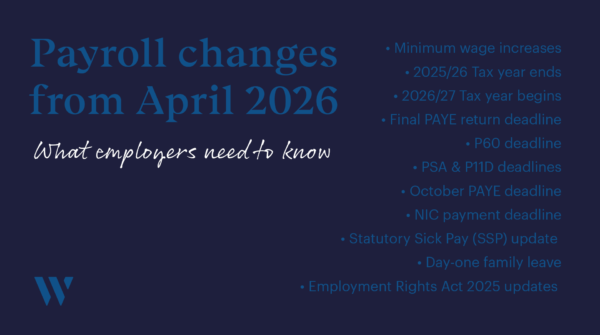
April is always a packed month in the payroll calendar, and this year is no different. From minimum wage increases to new tax year deadlines and employment law updates, there’s plenty to keep on your radar.
So, we’ve broken it all down.
➡️ 1st April 2026
National Minimum Wage Increases
From 1st April, new hourly rates apply:
- National Living Wave (21 and over): £12.71
- 18 – 20 year olds: £10.85
- 16 – 17 year olds: £8.00
- Apprentice rate: £8.00
If you have team members on or near these rates, you’ll need to update pay from the first payroll period after 1st April. Underpaying minimum wage isn’t just an oversight, it can lead to penalties and reputational damage.
⭐ Now is also a good time to sanity-check salary sacrifice arrangements to ensure no one falls below the legal minimum.
➡️ 5th April 2026
End of the 2025/26 tax year
This is the final day of the 2025/26 tax year. So, you need to make sure:
- All pay and deductions are processed correctly
- Any final adjustments are made before year-end
- Your records are tidy and complete
➡️ 6th April 2026
Start of the 2026/27 tax year
A new tax year begins, and with it comes updated tax codes, thresholds, and rates.
Payroll systems should be updated in line with HMRC guidance before running the first payroll of the new year.
➡️ 19th April 2026
Final PAYE return deadline
Deadline to submit your final PAYE return for the 6th April 2025 to 5th April 2026 tax year.
⭐ Missing this can result in penalties, so it’s one to pop in your diary now!
➡️ 31st May 2026
P60 deadline
By 31st May, employees must receive their P60 for the 2025/26 tax year.
The document confirms:
- Total taxable pay for the year
- Income tax deducted
It’s a key document for employers, particularly if they’re applying for mortgages or completing self-assessment returns.
➡️ 5th July 2026
PAYE Settlement Agreement (PSA) deadline
This is the final date to agree a PAYE Settlement Agreement with HMRC for the 2025/26 tax year.
If you provide taxable benefits or expenses and want to settle the tax on behalf of employers, this needs to be arranged by this date.
➡️ 6th July 2026
P11D deadline
Deadline to:
- Submit P11D forms to HMRC
- Provide copies to relevant employees
P11D report benefits in kind and certain expenses provided during 2025/26.
➡️ October 2026
Payment deadlines
18th October: deadline for paying:
- Tax and Class 1B NICs on PSAs (non-electronic payment)
- PAYE, NICs, student loan, and CIS deductions for month ended 5th October (non-electronic)
22nd October: deadline for the same payments if paying electronically.
⭐ Electronic payment is the norm for most employers, so 22nd October is the likely key date.
➡️ Key employment law changes from April 2026
Alongside payroll deadlines, there are wider employment law updates to be aware of.
- Day-one rights for family leave
- Employers will have day-one entitlement to:
– Paternity leave
– Parental leave
The restriction preventing paternity leave being taken after share parental leave will also be removed.
Statutory Sick Pay (SSP) reform
SSP is becoming more accessible:
- Payable from day one of sickness (no three waiting days)
- Lower earnings limit removed. All employees qualify, regardless of earnings
This is likely to increase employer costs, particularly for business with part-time or lower-paid staff.
Stronger enforcement and employee protections
Changes under the Employment Rights ACT 2025 include:
- Reporting sexual harassment becoming a protected disclosure in its own right
- Increase in the protective award for collective redundancy failures (up to 180 days’ pay)
- Potential reduction in the trade union recognition threshold
- Commitment to secure electronic balloting
- A new enforcement body, the Fair Work Agency, will also be established with powers to enforce wage and employment rights.
⭐ So, what should employers do now?
April may feel like a little way off, but preparation is key!
- Review pay rates ahead of 1st April
- Budget for increased wage and SSP costs
- Ensure payroll software is updated for the new tax year
- Diarise key compliance deadlines
- Review employment contracts and policies where needed
Payroll compliance isn’t just about paying people one time, it’s about protecting your business from penalties and ensuring your team is treated fairly and lawfully.
As always, we’re here to help! If you have any questions, get in touch by email, phone, or pop us a message on WhatsApp:
Call us: 01872 267 267
Email us: [email protected]
Message us: 0777 49 39 111
And, keep an eye on our social for more tool, tips, and updates: